

Quick-start guide for Idaho home construction loans
Construction financing differs from a traditional mortgage in fundamental ways. Instead of receiving a lump sum at closing to buy an existing home, construction loans release funds in phases called draws, tied to milestones your builder completes on site. The building phase introduces variables that standard home purchases never face: weather delays, material costs, inspections, builder performance, and appraisal assumptions about a home that does not yet exist.
At Home Lending is an independent, Idaho-based mortgage brokerage that works with multiple construction financing lenders rather than offering a single in-house loan program. That means borrowers can compare available construction loan programs side by side, including differences in draw procedures, interest during the build, permanent financing options, and lender-specific requirements for builders and budgets.
Every construction loan decision depends on borrower profile, land, builder, detailed plans, project budget, appraisal, and individual lender guidelines. The information below is educational and does not represent a commitment to lend or a guarantee that any specific program, rate, or approval outcome will be available.
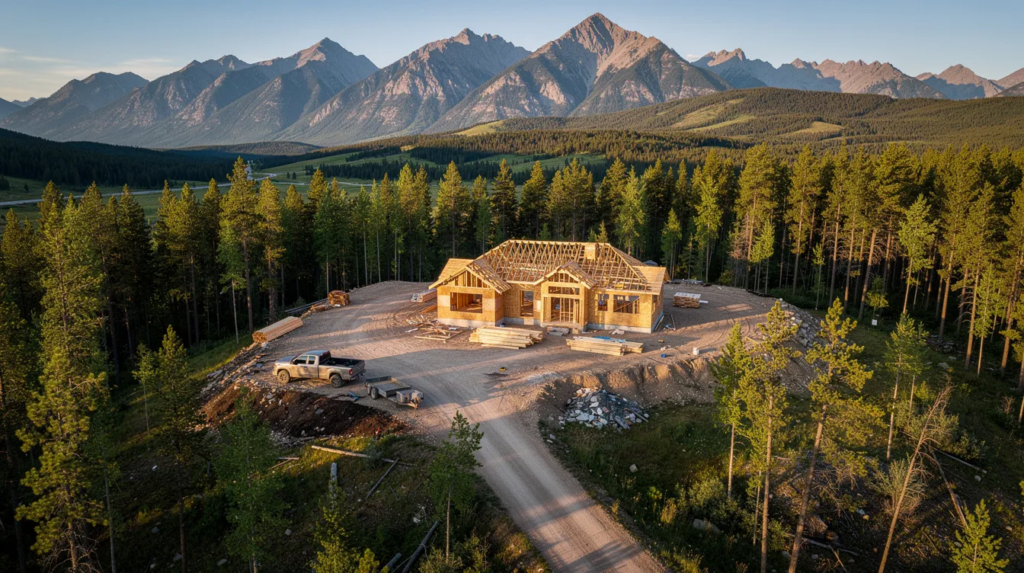
Construction loans vs. traditional mortgages in Idaho
Most Idaho borrowers are familiar with how a traditional mortgage works when buying an existing home. Construction loans are a different product category with different mechanics, costs, and risks.
Key differences include:
- Term length: Construction loans are usually short-term financing structures during the build phase, while the permanent mortgage is typically a longer-term loan.
- How funds arrive: Traditional mortgages generally provide funds at closing to buy an existing home. Construction loans disburse funds in phases as construction progresses, with each draw released after work is verified according to lender requirements.
- Payment structure: Some construction loans use interest-only payments during the construction phase, often based on the amount already drawn rather than the full approved loan balance. Payment structure varies by lender and loan program.
- Valuation basis: A home construction loan often relies on the projected as-completed value of the finished home, while a traditional mortgage is usually based on the current appraised value of an existing property.
- Rates and qualification: Construction loan rates and qualification requirements may differ from traditional mortgage rates because the lender reviews both the borrower and the construction project. Credit, equity, builder, property, appraisal, and program requirements vary by lender.
Many Idaho construction projects use a construction-to-permanent loan, also called a one-time close, that rolls into permanent financing once the home is finished. Others use a separate construction-only loan followed by a new end loan. At Home Lending helps compare both the construction phase costs and the long-term permanent mortgage so borrowers can evaluate the full picture.
Types of home construction loans and lot loans Idaho borrowers see
Different project goals across Idaho call for different loan structures. A custom lakeside cabin near Coeur d’Alene, a shop-house on rural acreage, or an infill lot build in Post Falls each present different financing needs. Common types of construction loans Idaho lenders may offer include:
- Home construction loan for a primary residence or second home, financing the full build from foundation to final inspection.
- Construction only loan that covers the build period, after which the borrower secures a separate traditional mortgage at completion.
- Construction to permanent loan (one-time close) combining the short-term financing of the build with permanent financing in a single closing.
- Lot loan for purchasing land first with plans to build later, sometimes with conditions on when construction begins.
- Renovation loans for major renovations or significant remodeling of an existing home, sometimes structured similarly to new construction loan programs.
- Owner builder construction loan for borrowers acting as their own general contractor. These are rare, carry strict requirements, and are offered by very few lenders.
FHA construction loans, VA construction loans, and some programs that offer USDA loans may also apply in Idaho, depending on the property location, borrower eligibility, lender participation, and current program requirements. FHA-related credit and down-payment rules can vary by product and lender overlay, so borrowers should not assume one minimum credit score applies to every construction scenario.
Not every lender offers every type, which is one reason borrowers in North Idaho often work with an independent broker to see which construction loan lenders match their project. Program availability changes over time and depends on lender participation, so borrowers need current, personalized options before relying on any loan type.

Who actually lends: banks, credit unions, brokers, and private construction lenders
The phrase “construction financing lenders” covers a broad category of financial institutions, each with different strengths.
- Local banks and regional banks in Idaho and the Inland Northwest may offer in-house construction loans and portfolio lot loans. They tend to have strong knowledge of local land costs, builder reputations, and permitting processes. A national bank may also participate in construction lending, though local familiarity can vary.
- Credit unions are member-focused and sometimes offer home construction loans, but may have more limited draw policies or smaller builder approval lists.
- Mortgage brokers like At Home Lending access multiple wholesale lenders and online lenders without being tied to one institution’s guidelines. This lets borrowers compare financing options from several construction loan lenders through a single point of contact.
- Private lenders and hard-money sources serve a niche role. Private and alternative financing options can be useful for complex construction projects, non-standard builds, or borrowers with unusual income profiles. Self-employed borrowers may find non-traditional loan options available through these channels. However, rates, terms, fees, documentation standards, and exit strategy requirements from private construction lenders can differ significantly from standard mortgage financing.
Borrowers in Coeur d’Alene, Post Falls, Hayden, and Sandpoint often benefit from combining a local relationship with a trusted mortgage broker in Coeur d’Alene. At Home Lending is not a bank and does not warehouse its own construction loans. Instead, it helps match borrowers with participating lenders whose guidelines fit the project.
Core construction loan requirements Idaho borrowers should expect
Construction loan requirements are more involved than what most borrowers encounter when buying an existing home. Lenders review more variables because they must evaluate the borrower, land, builder, plans, budget, appraisal, and construction process. The application timeline varies by lender, borrower documentation, builder package, appraisal, title work, underwriting, and closing conditions.
Building Plans and Contractor Requirements
Lenders require detailed building plans and specs, including floor plans, elevations, materials lists, and energy features. These documents are essential for construction loan approval across nearly all loan programs.
A signed building contract or cost-plus agreement with a qualified contractor is also commonly required. Lenders often require a registered, licensed where applicable, and insured contractor for construction loans, with a track record in the area.
Credit and Down Payment Guidelines
Borrower credit approval documentation is a key part of the process. This includes credit score, credit history, monthly income, debt-to-income ratio, assets, reserves, and overall financial strength. Borrowers with stronger credit profiles may access more favorable terms, but guidelines vary by lender, loan program, occupancy, property type, and project structure.
Construction loans often require careful planning around borrower contribution, land equity, reserves, liquidity, and closing costs. Down payment and liquidity needs are important factors in assessing eligibility, and each lender sets its own guidelines.
Appraisal and Budget Considerations
A complete construction budget is required, covering hard costs (foundation, framing, roofing, mechanicals), soft costs (permits, design, engineering fees), and a contingency reserve for unexpected overruns. Land information, including current value, purchase price, zoning, access, utilities, and whether septic or well systems are involved, must also be provided.
An appraisal based on as-completed value is necessary, estimating what the finished home will be worth compared to similar completed properties nearby. There is no universal credit score, down payment, or debt to income ratio number that guarantees credit approval, but understanding how these choices affect the long-term benefits of homeownership can help you plan more effectively.
Land, lot loans, and using land equity in North Idaho
Idaho borrowers frequently purchase land or a lake lot first, then figure out home construction financing later. Planning the sequence carefully can save time and reduce complications.
A lot loan finances the purchase of land for future construction. For example, a borrower might purchase five acres outside Rathdrum with plans to build in two to three years. Lot loans tend to carry higher interest rates and shorter terms than a standard mortgage, and lenders may require construction to begin within a defined timeframe.
Raw land with no utilities, road access, or improvements carries more risk than an improved lot in a Coeur d’Alene subdivision. That difference affects required equity, loan terms, and which lenders will participate. If you already own your lot, land equity may count toward part or all of the required equity injection for a new construction loan, subject to appraisal and lender guidelines.
Not all construction financing lenders will refinance an existing property or roll a standalone lot loan into a construction loan. Some prefer separate structures. This is an important comparison point that At Home Lending can help evaluate when reviewing your financing options.
Choosing a builder and acting as your own general contractor
Lender comfort with the builder is central to construction financing approval. Lenders often have specific requirements for approving builders, which directly affects loan eligibility.
Typical lender expectations include:
- Proper Idaho contractor registration or licensing where applicable, plus adequate insurance coverage.
- A portfolio of completed homes in the relevant price range and area, such as Kootenai County or Bonner County.
- Satisfactory references and a track record of completing construction projects in the relevant market. Builders must often be registered or licensed where applicable and insured for construction loans.
Most mainstream construction loan lenders in Idaho prefer a third-party qualified builder managing contractor labor and project oversight. Owner builder loans exist for borrowers who want to act as their own general contractor, but they are uncommon and usually require substantial building experience, strong financials, stronger equity, and additional lender review. Even where owner-builder activity may be legally permitted, most lenders still require a registered, licensed where applicable, and insured general contractor for underwriting purposes.
If you want to serve as your own general contractor, talk with a broker early to see which lenders, if any, will consider that structure. Lender approval of the chosen builder is never guaranteed.
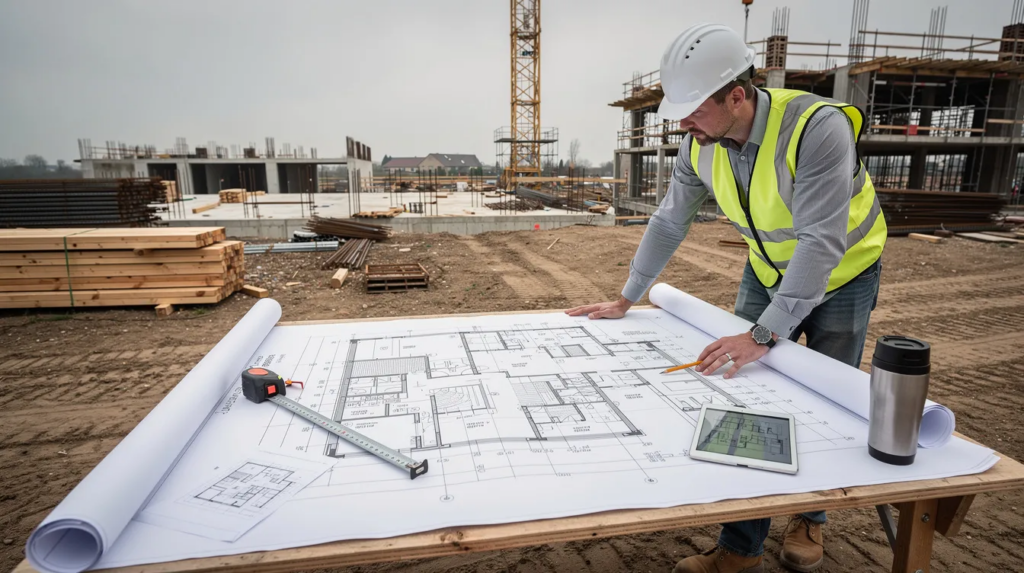
Construction budgets, appraisals, and as-completed value
A realistic budget and appraisal are the backbone of any construction loan approval. When lenders evaluate your file, they look at both what you plan to spend and what the finished home will be worth.
Construction Budget Breakdown
A construction budget typically includes line items for land, site work, labor, materials, permits, professional fees, contingency, and other project costs. Borrowers can separately explore future principal, interest, taxes, and insurance with an online mortgage payment calculator:
- Line-item breakdowns covering site work, foundation, framing, mechanicals, interior finishes, permits, and professional fees.
- A separate contingency reserve to cover overruns, change orders, material-cost changes, and unexpected site conditions.
- Clear allowances for items like cabinets, flooring, and appliances.
Appraisal Process and Value Considerations
Appraisers in Idaho estimate the as-completed value by comparing your plans to similar finished homes in the same market. A new build near Lake Coeur d’Alene will pull different comparables than rural acreage toward Athol. The maximum loan amount may depend on lender guidelines, total project cost, appraised as-completed value, borrower contribution, land equity, and loan program requirements, which can directly impact how much cash a borrower must bring.
At Home Lending helps borrowers understand how different lenders view costs, appraisal assumptions, and equity requirements, but cannot control the final appraised value or lender decision.
Draw schedules, inspections, and managing cash flow during construction
Once a construction loan closes, daily success depends on how draws, inspections, and interest payments are managed month to month. Funds from construction loans are disbursed in phases as construction progresses, not as a lump sum.
A typical draw schedule follows these stages:
- Land purchase or payoff of an existing lot loan (if applicable)
- Site prep and foundation
- Framing and roof
- Rough-in work (plumbing, electrical, HVAC)
- Interior finishes and final completion
Lenders usually order inspections before releasing each draw to confirm work is complete and funds are being used according to the draw process. Many construction financing lenders have defined draw schedules, inspection steps, and documentation requirements.
Borrowers may make interest-only payments during the construction phase, often based on the funds already drawn rather than the full approved amount. Some Idaho families build a reserve for interest payments into the project budget, while others plan to cover those costs from their own monthly cash flow. Proper management of project timelines can influence construction financing options and help borrowers avoid unnecessary delays or cash-flow surprises.
Ask each lender how often they allow draws, how long inspections take in North Idaho markets, and whether there are fees per draw.
Construction-to-permanent loans and permanent financing strategy
Many Idaho borrowers consider a construction-to-permanent loan over separate construction and end loans because it may simplify the financing structure and reduce duplicate closing steps, especially when they are also monitoring current Idaho mortgage rates. Construction-to-permanent loans are designed to transition into permanent mortgage financing after the home is finished and final lender conditions are met. The construction phase timeline and conversion process depend on the lender, loan program, project, and closing conditions.
Key features of a construction to permanent loan include:
- One closing up front, which may reduce duplicate closing steps and certain duplicate costs compared with two-close construction loans, which require securing separate financing for construction and then for permanent mortgages.
- The ability to lock or structure the permanent interest rate early, with some lenders offering an extended rate lock or float-down provision. Whether you want a fixed rate or another structure, the options depend on the program.
- Selection from various permanent loan types once construction is complete, such as conventional fixed-rate long-term mortgage products.
A construction-only loan, by contrast, may require the borrower to qualify for separate permanent financing at completion, with additional underwriting, closing costs, and exposure to future interest rate changes.
When planning permanent financing, consider your expected completion date, construction timeline, and long-term goals. Will the home be your primary residence, a second home, or an investment property? Are you focused on payment comfort or faster payoff? These factors shape which specialized loan program fits best. At Home Lending helps Coeur d’Alene–area borrowers compare which participating mortgage lenders offer construction-to-permanent loans and what permanent financing options are available at conversion, drawing on its broader experience with home loans in Coeur d’Alene, without promising any specific rate or approval outcome.
Key questions to ask construction financing lenders in Idaho
Comparing lender terms might involve assessing draw schedules, interest rates, and closing costs. Before choosing a lender, bring these questions to every conversation:
- Do you offer construction-to-permanent loans, construction-only loans, or both?
- How do your construction loan rates and fees compare with your traditional mortgages?
- What are your construction loan requirements for land, down payment, and reserves?
- How do you treat land equity if I already own my lot?
- What is your minimum and maximum construction period (for example, 9, 12, or 18 months)?
- How many draws are allowed, and what are the inspection and draw fees?
- Do you require me to use an approved builder list, or can I select my own licensed contractor? Can I act as an owner builder?
- How is the permanent financing structured, and can I choose from different loan types at conversion?
- Do you offer any government-backed options such as FHA construction loans, VA construction loans, or programs that offer USDA loans, and how do these compare with other types of mortgage loans you provide?
- Is a home equity line available if I need additional short term financing during the build?
Write these questions down and use them when comparing local banks, credit unions, and broker-arranged options in North Idaho. At Home Lending’s role is to help interpret these answers across multiple participating lenders so borrowers can make informed choices. A loan officer familiar with construction lending can walk through the details specific to your situation.
How At Home Lending helps Idaho borrowers compare construction financing lenders
At Home Lending is a local, independent mortgage brokerage focused on Idaho, North Idaho, and Coeur d’Alene clients who are planning to build. Rather than offering one fixed set of loan programs, the brokerage works with multiple participating lenders, giving borrowers access to a wider range of construction financing options than a single bank or credit union typically provides.
Specific ways the brokerage supports borrowers include the kinds of personalized, flexible strategies highlighted in its customized mortgage solutions for Idaho clients:
- Reviewing borrower goals, budget, land situation, and construction timeline before contacting lenders.
- Identifying which participating lenders offer construction loans, construction-to-permanent loans, or lot loans that might fit the project, whether it is a standard build, a barndominium on acreage, or a renovation of an existing home.
- Explaining differences in guidelines, draw procedures, inspection requirements, available interest rates, fees, and permanent financing options across lenders.
- Coordinating with the builder, title company, and lender throughout the process to help keep communication clear and the construction timeline on track.
At Home Lending does not guarantee approval, interest rates, or savings. All loans are subject to lender underwriting, appraisal, and closing conditions. Construction financing depends on borrower profile, property type, land, builder, project budget, and program availability.
If you are considering building your dream home in Idaho, schedule a consultation before you purchase land or sign a building contract. You can also request no-obligation mortgage quotes to compare options side by side. Understanding your home construction financing options in advance gives you a stronger foundation from the moment construction begins.