

A one-time close construction loan may allow an eligible borrower to finance land acquisition, home construction, and a permanent mortgage through one closing. Instead of juggling multiple loans and separate closings, this structure bundles both the construction phase and the permanent financing into a single loan, depending on the lender, program, and project.
In Idaho – including Coeur d’Alene, Hayden, Post Falls, Rathdrum, Dalton Gardens, Hayden Lake, Spirit Lake, and greater Kootenai County – buyers frequently explore construction financing when they want to build on acreage, rural land, or a custom lot rather than purchasing an existing home. At Home Lending is an independent mortgage brokerage in Coeur d’Alene that can help borrowers compare construction financing options, including certain One Close Construction products when available.
This article covers how construction loans work in Idaho, how one-time close differs from two-time close, how land and builder approval work, what to expect during the construction phase, and how the loan converts to permanent financing. One important point upfront: a construction loan is not a lump-sum payout. Funds are controlled, disbursed through a draw schedule, and tied to inspections and construction milestones.
What Is a One-Time Close Construction Loan?
A one-time close construction loan – also called a single close construction loan or construction-to-permanent loan – is structured so the borrower closes once. The loan then funds home construction and later becomes a permanent mortgage after the home is complete, and some FHA-backed versions are offered through the Federal Housing Administration.
There are two distinct phases:
- Construction phase: A short-term construction period where funds are released as the home is built. The borrower does not receive the full loan amount at once.
- Permanent phase: Once construction is finished, the loan transitions, converts, or is modified into permanent financing according to the loan program and closing documents – for example, a 30-year fixed-rate loan – subject to program rules.
With a one-time close construction loan, underwriting for both the construction and permanent financing is generally completed upfront. Construction loans typically require a single qualification process, so the borrower is not usually re-underwritten for a separate permanent mortgage after completion. However, a re-verification of employment is typically done before conversion.
Here is how funds are handled:
- The lender holds construction funds in a controlled account.
- Money is paid to the builder in draws after work is verified at each milestone.
- The borrower does not receive free-use cash for unrelated purposes.
Compare this to a standard mortgage, where the home already exists, the full loan funds at closing, and there is no construction phase, draw process, or builder approval to manage.
You may see this product described as a one close construction loan, single close loan, or construction to permanent loan. While the labels differ, the core concept is similar: one closing, one loan, one set of closing fees covering both the construction and permanent phases.
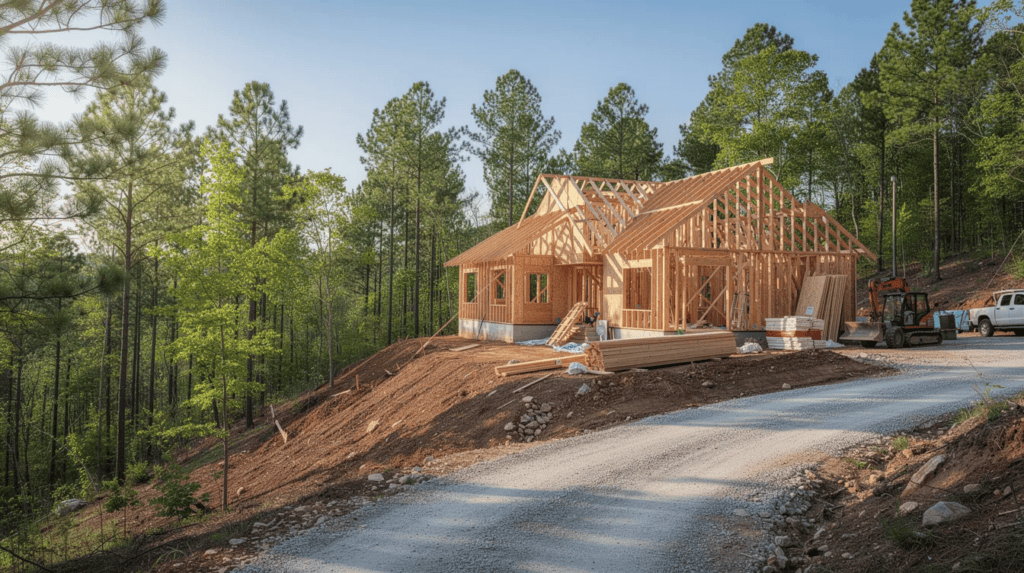
How Construction Loans Work in Idaho
Here is a step-by-step overview of how a typical construction loan works in Idaho.
1. Initial Consultation and Pre-Qualification
The borrower meets with a mortgage professional – such as At Home Lending in Coeur d’Alene – to discuss goals, budget, income, credit profile, debts, and available funds. The pre-qualification process helps identify which programs may fit.
2. Land or Lot Review
The lender determines whether the borrower already owns land or will purchase it at closing. Access, utilities, zoning, and local considerations like wells and septic systems – common across Kootenai County – are discussed early.
3. Builder and Project Planning
The borrower selects a licensed builder acceptable to the lender. Plans, specifications, and a preliminary cost estimate are started.
4. Full Application and Documentation
The borrower submits income, asset, and credit documentation. The builder provides plans, budget, contracts, insurance, and license information.
5. Appraisal and Underwriting
An appraiser reviews the land and plans to produce an as completed value. Underwriting evaluates the borrower, builder, property, and project risk together.
6. Closing
For one-time close construction loans, the borrower signs one set of closing documents covering both construction and permanent financing. Closing timelines vary based on borrower documentation, builder approval, appraisal, title, land review, plans, underwriting, and program requirements.
7. Construction Phase
Construction begins once the loan closes. The builder requests draws according to the agreed draw schedule. The lender orders inspections before releasing funds. Construction timelines depend on the lender, loan program, builder, project scope, permitting, weather, inspections, and any approved extensions.
8. Completion and Conversion
After the final inspection and certificate of occupancy, the construction term ends and the loan transitions to permanent mortgage payments.
One-Time Close vs. Two-Time Close Construction Loans
Idaho borrowers generally see two broad structures for financing a new build: one-time close (single close) and two-time close (separate loans for construction and permanent financing).
| Feature | One-Time Close | Two-Time Close |
|---|---|---|
| Number of closings | One closing | Two or more (construction loan + separate permanent mortgage) |
| Construction financing | Included in the single loan | Short term construction loan funds the build |
| Permanent financing | Built into the same loan | Requires a separate permanent mortgage or refinance |
| Interest-rate risk | Rate treatment is established by the lender and program before closing; lock, float, or modification rules vary. | Rate may change before permanent phase |
| Closing costs | One set of closing costs | Two separate sets of closing fees |
| Requalification risk | Generally no full re-underwriting at conversion | Must re-qualify for the permanent loan |
| Flexibility | Less flexibility to change lender or terms after closing | More flexibility to shop the permanent loan later |
| Best suited for | Borrowers wanting certainty and streamlined process | Borrowers who want to wait on permanent terms or expect rate improvement |
| With a two-time close, the borrower takes out a short term construction loan, then refinances into a permanent loan after completion – effectively managing two separate loans. A one-time close plans both phases upfront and can reduce additional appraisal and closing costs tied to a second closing. | ||
| Neither option is automatically cheaper or safer. The best fit depends on the borrower’s tolerance for interest rate changes, project complexity, timeline, and program availability for the property type and location. |
Construction-to-Permanent Loan Explained
“Construction-to-permanent loan” is a broad category that includes many one-time close construction loans. The defining feature: construction financing and a permanent mortgage are bundled into a single structure rather than handled as separate loans.
During the construction phase, funds are disbursed in stages for site work, materials, labor, and permits. How the borrower handles payments during this period depends on the program – some require monthly interest only payments on drawn funds, others may use interest reserves or defer payments. This is not a one-size-fits-all structure.
After the home is complete and passes the final inspection, the loan converts to permanent financing. The term length (such as 15 or 30 years) and payment structure should be established before the initial closing. At that point, the borrower transitions to regular principal-and-interest payments on the full loan amount.
Before closing, borrowers should confirm:
- How and when the interest rate is set
- Whether the conversion is automatic or requires a modification agreement
- When full mortgage payments begin
You can estimate your mortgage payment using At Home Lending’s calculator to understand what the permanent phase may look like.
Construction-to-permanent loans remain more complex than a standard mortgage because the lender must underwrite future property value and construction risk – not just the borrower’s finances, and Idaho borrowers may also want to keep an eye on current Idaho mortgage rate trends when evaluating overall costs.
Can You Buy Land and Build a House With One Loan?
Some one-time close construction loans allow borrowers to finance both the land purchase and home construction in a single loan and one closing. You can finance land purchase and construction costs together, subject to program and lender guidelines.
Two common scenarios in North Idaho:
- Borrower already owns land – for example, a parcel near Spirit Lake or Hayden Lake. The land’s appraised value and existing land equity may help meet the construction loan down payment or equity requirements.
- Borrower is purchasing land at closing – perhaps a wooded lot in rural Kootenai County. The land and construction loan can fund both the lot and build cost together if the program permits this structure.
Lenders evaluate the lot carefully:
- Legal access (recorded easements, private road agreements)
- Utility availability (power, water, sewer or septic, well)
- Zoning and buildability under local jurisdiction rules
- Title clear of issues that would prevent construction or permanent financing
Not every parcel qualifies. Very remote, landlocked, or speculative investment tracts face additional scrutiny. Some programs may require the property to be a primary residence rather than an investment property.
If you are considering a land and construction loan scenario, discuss specifics with At Home Lending before writing offers on land so financing structure and timing align with the purchase and build plans.
Construction Loan Requirements: How Lenders Evaluate Borrowers and Projects
One-time close construction loans often have stricter qualification requirements compared to traditional loans. The lender is funding a project that does not yet exist and must manage construction risk in addition to borrower risk.
Borrower Qualification
- Credit history and scores – Credit-score requirements vary by loan program, lender, borrower profile, property type, and project risk. Government-backed and conventional construction programs may apply different standards, and lenders may add overlays. Conventional loans often have stricter credit score requirements than FHA or VA loans.
- Stable income and employment history
- Debt-to-income ratio based on the proposed permanent mortgage payment
- Assets available for down payment, closing costs, and reserves
Property and Project Factors
- Land characteristics (rural vs. in-town, access, utilities, topography)
- Property type – eligible projects include custom-built homes, modular homes, and manufactured homes with specific guidelines, depending on program
- Occupancy – many programs require primary residence
Project Approval Elements
- Detailed construction plans and specifications
- Line-item construction budget
- Reasonable completion timeline accounting for Idaho’s climate
- Builder approval (licensing, insurance, experience)
- Satisfactory appraisal based on as completed value
FHA loans are designed for borrowers who may not meet conventional standards, potentially offering more accessible credit and down payment requirements. Beyond agency guidelines, individual lenders may add overlays. Working with a broker like At Home Lending can help compare different lenders’ interpretations.
Down Payment and Funds Needed for Construction Financing
Construction loan down payment requirements vary by program type, occupancy, loan amount, property type, land equity, borrower profile, and project structure. There is no single percentage that applies universally.
Some government-backed programs may allow lower borrower contributions for eligible borrowers, while conventional construction financing may require different borrower contributions depending on the lender and project. Construction financing also often involves additional cash planning for closing costs, reserves, contingencies, inspections, permits, and possible cost overruns.
What can contribute to your equity position:
- Cash down payment at closing
- Land equity (if land is already owned, based on current appraised value)
- Documented value of certain completed site improvements, if accepted by the lender
Cash-to-close typically includes more than just the down payment. Expect to budget for closing costs (lender fees, title, escrow, recording), prepaid items like insurance and property taxes, contingency reserves for cost overruns, and inspection or draw fees during the construction phase.
If the down payment is below 20% on a conventional loan, private mortgage insurance may be required, adding to monthly costs.
Early budgeting with your builder and loan officer helps avoid surprises. At Home Lending can walk through a line-item estimate to clarify likely cash requirements, and borrowers who want to strengthen their application can review factors that make up a credit score to understand how credit may impact qualification.
Builder Approval and Contractor Review
Lenders generally require approved builders and detailed construction plans for one-time close loans. The builder’s ability to finish on time and on budget is central to the lender’s risk assessment.
Typical builder approval items include:
- Active contractor license in Idaho and appropriate insurance (general liability, workers’ compensation)
- Experience building similar homes in the region
- References, portfolio, and track record of completed construction projects
- Financial capacity to manage the project through draw cycles
The lender usually reviews:
- The construction contract between borrower and builder
- Plans and specifications
- Proposed budget and draw schedule
- Builder’s financial statements where required
Many one-time close construction loan programs do not allow the borrower to act as their own general contractor. Even borrowers who are licensed contractors themselves may need an independent, arm’s-length general contractor approved by the lender.
Builder approval by a lender is not a guarantee of workmanship or performance. Borrowers should still conduct their own due diligence – check references, visit completed projects, and review contracts carefully before signing.
Construction Plans, Budget, and Specifications
For both one-time close and traditional construction loans, the lender needs detailed project documentation before approval.
Plans
The builder and borrower must typically provide:
- Architectural plans and elevations
- Site plan showing home location, driveway, wells, septic field (if applicable), and setbacks
- Construction specifications listing materials, finishes, and mechanical systems
Budget
The line-item budget matters. Lenders expect separate entries for excavation, foundation, framing, roofing, mechanicals, interior finishes, landscaping, and allowances. The budget should clearly identify what the builder includes versus what the borrower handles separately.
Timeline
Lenders may also require:
- A realistic construction timeline accounting for Idaho weather and possible winter slowdowns
- Confirmation that required permits will be obtained before major draws are released
- A defined change-order process
Permits
Vague or incomplete plans can delay appraisal and underwriting, create disputes during construction about scope, and increase the risk of construction costs exceeding the approved budget.
Investing time upfront in clear plans pays off. Coordinate with At Home Lending and your builder before finalizing the construction contract.
Construction Loan Appraisal: “As-Completed” Value in Idaho
With a construction loan, the appraiser evaluates the property based on plans, specifications, and the lot – not an existing home. The result is an as completed value estimate representing what the finished home should be worth.
Key appraisal components:
- Current land value based on comparable land sales
- Projected value of the completed home, considering square footage, quality, design, and local market conditions
Appraisers may use:
- Sales comparison approach: Recent sales of similar new or nearly new homes in the area
- Cost approach: Especially relevant when comparable sales are limited, which is common for unique rural or lake-area properties in North Idaho
Important to understand: the appraised value may be higher or lower than the total build cost. A one-time close construction loan commonly relies on an appraisal ordered before closing based on the land, plans, specifications, and expected completed value. Additional inspections, title updates, completion evidence, or final documentation may still be required.
Unusual lots – steep slopes, heavy timber, waterfront, or large acreage – may require more research from the appraiser and can extend timelines. Plan extra time for this step.
The appraised value is an independent opinion. It is not controlled by At Home Lending, the builder, or the borrower.
Draw Schedule and Construction Inspections
Funds are disbursed in stages through a construction draw schedule rather than all at once. This protects both the borrower and lender by tying payments to verified progress.
A typical draw schedule includes construction milestones such as:
- Foundation completion
- Framing
- Rough-in mechanicals (plumbing, electrical, HVAC)
- Drywall and interior finishes
- Final completion
For each draw, the process generally works like this:
- Builder submits a draw request with invoices or a progress statement
- Lender orders an inspection to confirm work matches the request
- Title updates or lien checks may be required before certain draws
- Funds are released to the builder or appropriate party according to the approved draw process
Delays in inspections, documentation, or approvals can slow down draws and affect the builder’s cash flow and timeline. Borrowers should understand their builder’s expectations around timing and how the lender’s draw process fits in.
The borrower is generally responsible for interest on disbursed amounts during the construction period, so a slower schedule may influence interest costs.
Review the proposed draw schedule and inspection requirements with At Home Lending and your builder before closing.
Interest During the Construction Phase
Interest during construction is handled differently depending on the loan program and lender.
Common structures include:
- Interest only payments: Borrowers typically make interest only payments during the construction phase on drawn funds – paying only on what has been disbursed, not the full loan amount.
- Interest reserves: Some programs set aside funds at closing to cover interest during construction, so borrowers make no payments during construction with certain one-time close loans.
- Deferred payments: Less common, but some structures defer all payments until the permanent phase begins.
Because interest is often calculated only on funds actually disbursed, early payments tend to be lower and increase as more construction draws are made.
If you are making monthly interest payments during construction, budget for those costs alongside rent or any existing property mortgage. If interest is built into reserves, it still represents a real cost factored into the overall project budget.
Ask specific questions before closing:
- When do payments start?
- How are they calculated?
- What happens if the construction period runs longer than expected?
Construction Loan Closing Costs
Closing costs for a one-time close construction loan can be more complex than for a standard existing-home mortgage. However, you only pay closing costs once with a one-time close loan, rather than facing duplicate fees from multiple closings.
Typical cost categories include:
- Lender fees (origination, processing, underwriting)
- Appraisal fees, including potential re-inspections
- Title insurance and escrow charges
- Recording and county fees
Construction-specific items may add:
- Inspection fees tied to the draw schedule
- Construction administration or draw fees
- Survey costs (boundary, topographical, or improvement)
- Builder’s risk or course-of-construction insurance
- Building permits and impact fees
- Well, septic, or utility hookup costs in rural North Idaho
Compare this to a two-time close structure, where you pay separate closing fees for the initial construction loan and the later permanent refinance – potentially duplicating title, escrow, and lender charges. One-time close loans may reduce duplicate closing costs by avoiding a second mortgage closing.
At Home Lending can provide a detailed Loan Estimate for a chosen program so borrowers understand expected costs before committing.
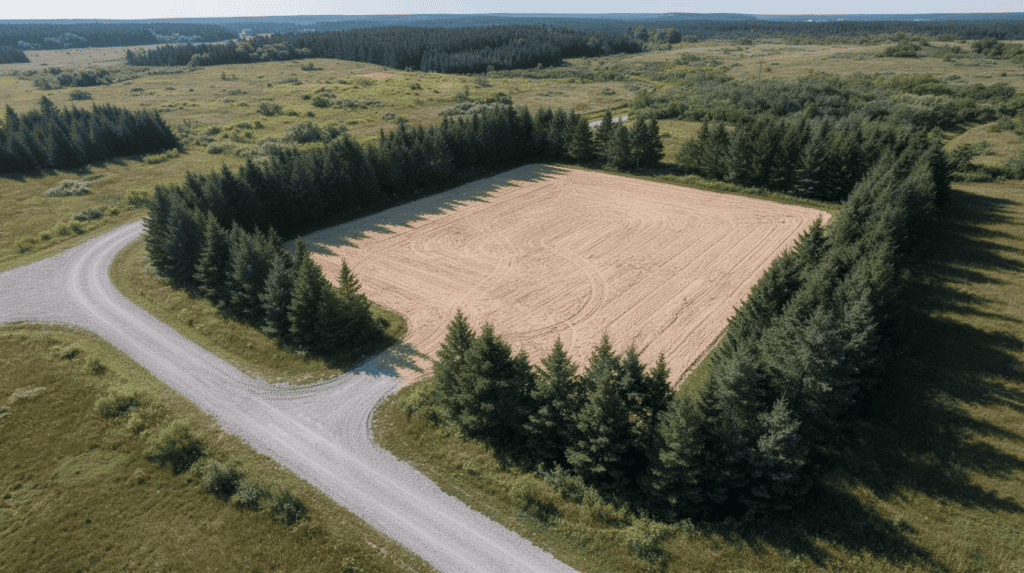
North Idaho Property Considerations for Construction Loans
North Idaho presents unique conditions that affect construction financing. Here are practical considerations for borrowers planning to build.
Rural and acreage parcels. Many buyers look at parcels around Rathdrum, Athol, Spirit Lake, or the outskirts of Coeur d’Alene. Lenders review road access, recorded easements, and road-maintenance agreements for private roads.
Utilities and infrastructure. Key factors include:
- Power access and cost to bring electrical service to the building site
- Community water vs. private wells, including well testing and production requirements
- Public sewer vs. septic systems, requiring approved septic design and perc tests
Terrain and weather. Sloped or wooded lots near Hayden Lake may require extra engineering, retaining walls, or specialized permanent foundation work. Winter weather and snow loads affect both design and the construction timeline, especially on higher-elevation parcels.
Outbuildings and accessory structures. Shops, RV garages, and detached structures are common in North Idaho. Confirm whether these are included in the financed project and how they impact the appraisal.
Manufactured or modular construction. Some programs accept manufactured or modular homes on a permanent foundation, but eligibility varies by lender and loan program. Confirm requirements early.
Property eligibility depends on the specific lender and program. Some may not finance extremely remote or off-grid properties, or may view certain unique designs as higher risk.
Permits, Zoning, Wells, Septic, and Utilities
At Home Lending does not provide legal or engineering advice, but borrowers should coordinate with their builder and local authorities early to confirm the project meets all requirements.
Items to verify before or during the loan process:
- Building permits from the relevant city or county (such as Kootenai County Community Development)
- Zoning designation, allowed uses, setbacks, height limits, and lot-coverage rules
On-site services for rural Idaho builds:
- Septic system approval, design, and permits from the local health district
- Well location, drilling permits, and water-quality requirements
- Utility plans for power, gas or propane, and communications
Access and road issues:
- Driveway permits where needed
- Recorded easements for access across private property
- Road-maintenance responsibilities for private lanes – lenders often want these documented
Special overlays or restrictions:
- Shoreline or floodplain limitations near lakes and rivers
- HOA or subdivision design guidelines and approval processes
Address these items in parallel with your loan application. Permit or utility delays can stall the construction timeline and draw schedule if not planned for upfront.
Construction Loans for Major Renovations or Additions
Construction financing is not limited to building from the ground up. It may also apply to major remodels, additions, or tear-down-and-rebuild projects that exceed standard renovation loan limits.
Scenarios where a construction loan may be considered:
- Adding significant square footage or a new second story
- Converting a cabin near Spirit Lake into a larger year-round residence
- Rebuilding an outdated home on a desirable Coeur d’Alene lot
- Structural changes that go beyond cosmetic renovation
For smaller projects – kitchens, baths, or minor additions – borrowers may be better served by a renovation loan or by rolling a home improvement loan into mortgage financing when purchasing or refinancing. Cash-out refinancing may also be an option for homeowners with equity in an existing home.
Whether a project uses a construction loan, renovation loan, or refinance depends on the scope and cost of work, existing equity, program availability, and borrower qualification, as well as long-term goals around benefits of homeownership and building equity.
One-Time Close Construction Loan Pros and Cons
| Pros | Cons |
|---|---|
| One closing instead of multiple closings | More upfront documentation and planning than a standard home purchase |
| Construction and permanent financing coordinated from the start | Builder must meet lender approval requirements |
| Reduced requalification risk at completion | Less flexibility to change plans or terms after closing |
| Permanent-rate terms may be set before construction, depending on the lender and program | Program availability may be limited for unusual properties or an investment property |
| One-time close loans simplify the financing process | Construction phase adds complexity beyond a traditional mortgage |
| One-time close loans save on closing costs | If construction runs long, extension costs or additional fees may apply |
| Cost comparisons should consider total interest during the construction term, combined closing costs, and any benefits from locking in permanent financing versus waiting. | |
| One-time close loans are not automatically easier or cheaper for every borrower. Compare them with two-time close structures and other available mortgage loan programs and review different types of mortgage loans with help from a knowledgeable local broker. |
Common Mistakes to Avoid With Idaho Construction Loans
These pitfalls cause delays, extra costs, or financing problems for North Idaho borrowers:
- Buying land without talking to a lender first. The lot may not meet program requirements, or the structure needed for a loan to buy land and build a house may differ from expectations.
- Assuming any builder is acceptable. Confirm licensing, insurance, and builder approval guidelines before committing to a contractor.
- Starting construction before the loan closes. Beginning site work before approval can complicate the appraisal and loan structure.
- Underestimating site-development costs. Driveways, rock excavation, utility trenching, well and septic work on rural acreage – these add up fast. Include a contingency budget.
- Assuming the appraisal will match the build cost. The as completed value is an independent opinion and may come in below total construction costs.
- Making large credit purchases or changing jobs. Significant changes to your credit profile or employment during the loan process can jeopardize approval.
- Ignoring draw timing. Not understanding how the draw process works can create builder payment conflicts and project delays.
- Changing plans after approval. Major design changes require lender re-approval and may need additional funds.
- Comparing only by interest rate. Construction mortgage decisions involve closing costs, construction-phase terms, and permanent loan features – not just the rate.
Early, ongoing communication with At Home Lending, your builder, and your real estate team can prevent most of these problems, and borrowers can also request no-obligation mortgage quote comparisons to ensure their construction financing remains competitive.
Steps to Get a Construction Loan in Idaho
Here is a practical roadmap for borrowers in Coeur d’Alene and greater Kootenai County.
- Define the project. Decide whether you are building a primary residence, second home, or another property type. Clarify budget and must-have features for your dream home.
- Plan for the land. Determine whether you already own land or need financing for land acquisition and construction together. Gather information on location, access, and utilities.
- Review your finances. Pull together income, asset, and debt information. Use At Home Lending’s mortgage calculator to estimate future payments at different loan amounts.
- Talk with At Home Lending. Schedule a conversation to review available construction loan options, including one-time close construction loans where eligible. Discuss qualification factors and realistic price ranges.
- Select a builder and finalize plans. Choose a licensed general contractor and develop complete plans, specifications, and a cost breakdown.
- Apply and provide documentation. Submit a full loan application and coordinate with your builder to deliver plans, budget, and builder documentation.
- Appraisal, underwriting, and closing. Complete the as completed appraisal, resolve conditions, and close the loan. For a one-time close, this covers both the construction and permanent phases.
- Build, draw, and convert. Follow the draw schedule and inspection process during construction. Upon completion and final approvals, the loan converts to the permanent mortgage phase, and regular payments begin.
Exact steps depend on the selected lender, loan program, property, builder, and project specifics.

How At Home Lending Helps North Idaho Borrowers
At Home Lending is an independent home loan broker in Coeur d’Alene, serving homebuyers and homeowners across North Idaho – including Hayden, Post Falls, Rathdrum, and surrounding communities.
As a broker, At Home Lending can compare construction financing options from multiple lenders rather than offering only one bank’s program. This may include One Close Construction options and other available construction-related financing structures through participating wholesale lenders, depending on borrower eligibility, builder approval, property type, project details, and current lender availability.
Specific ways At Home Lending assists construction borrowers:
- Reviewing goals, land situations, and builder plans
- Explaining differences between one-time close construction loans, two-time close loans, renovation loans, and standard purchase mortgages
- Helping estimate cash to close, including the impact of land equity, closing costs, and reserves
- Discussing whether an existing property’s equity could help fund a new build
- Coordinating with the borrower, builder, and real estate team
At Home Lending cannot guarantee approval, specific rates, or project funding. What they can do is help you understand your choices, compare loan limits and program features across lenders, and prepare a realistic construction financing plan.
Ready to explore your options? Contact At Home Lending to discuss your construction project and request a personalized construction-loan review.
Frequently Asked Questions About One-Time Close Construction Loans in Idaho
What is a one-time close construction loan?
A one time close construction loan combines construction financing and a permanent mortgage into a single loan with one closing. A one-time close construction loan converts to a permanent mortgage after the home is built.
How does a construction loan work in Idaho?
The borrower qualifies, selects an approved builder, provides detailed plans, and closes the loan. Funds are disbursed in stages during construction, and the loan transitions to permanent financing after completion.
Is a one-time close construction loan the same as construction-to-permanent financing?
They are closely related. A construction to permanent loan is a broad category, and most one-time close loans fall within it. The key feature is that both phases are handled through one loan.
Can I buy land and build a house with one loan?
Some programs allow land acquisition and construction in one loan. The land must meet lender and program requirements for access, utilities, and buildability.
Do I need to already own land?
No. Some one-time close loans can include the land purchase. If you already own land, that equity may contribute toward your down payment.
Can land equity count toward my down payment?
In many programs, yes. The lender appraises the land, and existing equity may reduce the cash needed at closing.
How much down payment is required?
It varies. Down payment depends on the loan program, lender, property, occupancy, land equity, borrower qualifications, and construction structure. Some programs may allow lower borrower contributions for eligible borrowers, but construction financing usually requires careful planning for cash to close, reserves, contingencies, and possible overruns.
What credit score do I need?
Requirements differ by program. Credit-score requirements vary by lender and program. Construction financing may involve stricter review because the lender is evaluating both the borrower and the build project. VA does not set one universal minimum credit score, but lenders may apply their own requirements.
Can I use any builder?
No. Most lenders require an approved builder who is a licensed builder with proper insurance and construction experience. Most programs do not allow the borrower to act as their own general contractor.
What documents are needed?
Standard income and asset documentation, plus builder-specific items: construction contract, plans, specifications, line-item budget, insurance, and license verification.
How does the appraisal work?
The appraiser estimates the as completed value based on plans, specifications, and the lot – not an existing structure.
How are construction funds released?
Through a draw schedule tied to construction milestones. Inspections confirm completed work before the lender will draw funds for the builder.
What happens if costs go over budget?
The borrower is typically responsible for overruns beyond the approved budget. A contingency reserve helps manage this risk.
Can I change plans after closing?
Significant changes usually require lender re-approval and may require additional funds or affect the appraisal.
When does my loan become a permanent mortgage?
After the final inspection, certificate of occupancy, and any required re-verifications, the loan converts to the permanent phase with regular principal-and-interest payments.
Are construction loan rates different from regular mortgage rates?
Construction loan pricing may differ from a standard completed-home mortgage because the lender is evaluating construction risk, builder performance, draws, inspections, land, and permanent financing terms. The exact rate structure depends on the lender and program.
Can construction financing be used for a major renovation?
Yes, depending on scope. Large additions, structural rebuilds, or tear-down projects may qualify. Smaller renovations may be better suited to a renovation loan or other renovation financing options.
Still have questions? Discuss your construction project directly with At Home Lending.