
There is no single correct construction loan rate for financing in Idaho. Every project in Coeur d’Alene, Hayden, Post Falls, Rathdrum, or wider Kootenai County is priced individually based on the borrower, lender, loan program, land, builder, plans, budget, appraisal, draw schedule, and how the permanent mortgage phase is structured. People often ask “what is a normal rate for construction loan in North Idaho?” The honest answer: no single number applies.
This guide is for Idaho homebuyers, builders, and property owners seeking to understand how construction loan rates are determined, what factors influence costs, and how to compare options. Understanding these details can help you make informed decisions and avoid costly surprises during your homebuilding journey.
Borrowers should look beyond the interest rate alone. Total cost may include closing costs, draw fees, inspections, interest during construction, contingency reserves, and long-term permanent financing terms. At Home Lending is a North Idaho independent mortgage brokerage that compares multiple lenders’ construction loan options rather than posting one generic rate table. This article does not list live rates; current rates change daily with market conditions.
Are Construction Loan Rates Different From Regular Mortgage Rates?
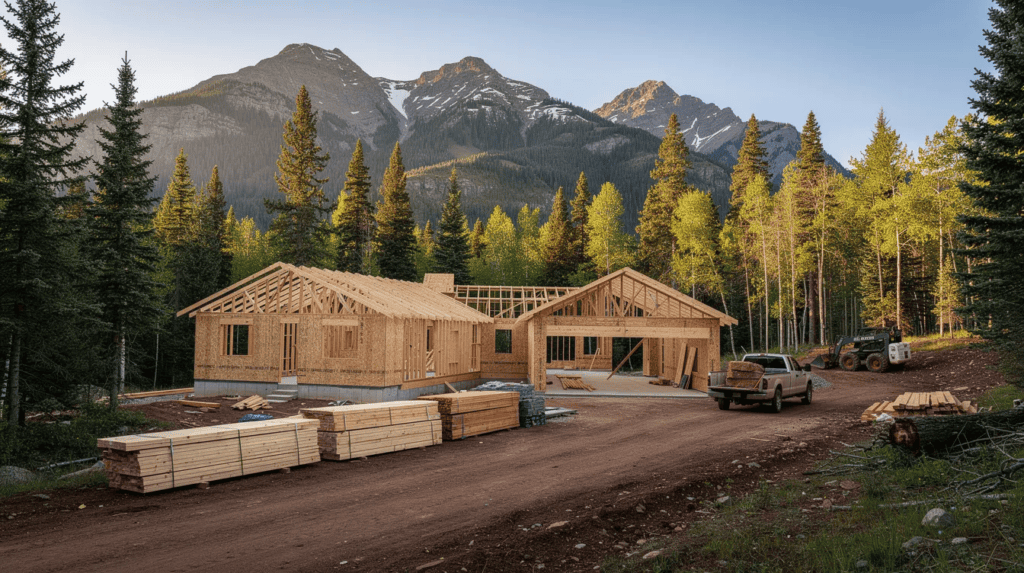
A standard home loan on an existing home in Coeur d’Alene is secured by a completed structure with a known market value. A home construction loan funding a build on raw land in Kootenai County is different: lenders evaluate both borrower risk and project risk, including builder qualifications, budget accuracy, timeline, and completion uncertainty. Construction-only loans cover only building costs and leave the borrower to arrange permanent financing separately, adding another layer of complexity. A construction-only loan is a short-term loan that covers only the costs of building the home, requiring the borrower to secure a separate permanent mortgage once construction is complete.
Construction loan rates may price differently from conventional mortgage rates because the lender is evaluating both borrower risk and project risk before the completed home exists. Pricing depends on the loan program, lender, borrower profile, builder, land, appraisal, draw schedule, inspection process, and permanent mortgage structure.
Compare rate, annual percentage rate, fees, draw costs, inspection costs, and permanent mortgage terms together instead of fixating on one quoted number.
What Affects the Rate for a Construction Loan?
No single formula determines construction loan rates. Most programs look at a consistent set of factors:
- Credit profile. Interest rates on construction loans can vary based on credit profile, but there is no single credit-score rule that applies to every program or lender. Requirements depend on the loan program, lender overlays, borrower profile, property type, and project risk.
- Income and employment. Stable, well-documented income (W-2, 1099, or self-employment with tax returns) generally makes risk easier to evaluate. Major job changes during the build can complicate approval.
- Debt-to-income ratio. Lenders typically assess debt-to-income ratios for construction loans; higher ratios can limit loan amount or affect pricing, though exact limits vary by program.
- Down payment and land equity. Verified funds or accepted land equity may be needed for the borrower contribution, closing costs, reserves, and construction-related expenses. Owning a lot in Hayden or Rathdrum free and clear may improve loan-to-value if the lender documents and accepts the land value. Programs with lower borrower contributions may involve mortgage insurance or additional requirements.
- Loan-to-value. LTV compares total loan amount to the appraised as-completed value. Lower LTV reduces lender risk and can sometimes improve the construction loan rate.
- Cash reserves. Some construction loan requirements include reserves for monthly payment obligations, taxes, and unexpected costs.
- Loan amount and property type. Very small or very large amounts, including jumbo loans for custom lakefront homes, or rural acreage with outbuildings may carry specialized pricing. Single family owner occupied homes typically qualify for the broadest range of programs, while second homes on Hayden Lake or investment property construction may price differently. Loan purpose matters.
- Builder approval. Construction loans usually require a licensed contractor for building. Lenders review licensing, insurance, experience, contract structure, and financial capacity. Owner-builder scenarios may be restricted, unavailable, or subject to specialized requirements because the lender must evaluate who is responsible for completing the project and managing construction funds.
- Plans, specs, and budget. A detailed homebuilding plan is often required by lenders to gauge risk. Vague or constantly changing plans make underwriting and payment calculation harder.
- Appraisal. Appraisers estimate as-completed value from plans, comparable sales, and budget. If appraised value falls below expected cost, LTV shifts and terms may change.
- Draw schedule and inspections. Each draw and inspection step carries a fee and logistical cost; more draws can increase total construction loan fees.
- Program and rate-lock structure. Fixed rate versus adjustable rate options, construction to permanent versus two-time close, and long versus short rate locks each price differently.
- Market conditions and lender overlays. National interest rate trends, investor appetite, and each lender’s internal guidelines move construction loan rates Idaho borrowers see week to week, along with other factors specific to each file.
One-Time Close Construction Loan Rates
A one-time close construction loan (sometimes called One Close Construction) uses one closing to set up both the construction phase and the permanent loan for your new home. The lender underwrites borrower, land, builder, and project once, then arranges both construction financing and the permanent mortgage at that single closing.
One-time close construction loan rates reflect both phases: a construction-phase interest rate tied to draws and the permanent mortgage rate that begins after completion. Rate treatment varies by lender and program. Borrowers should ask whether the permanent mortgage rate is locked, floating, modified, or otherwise structured, and when the permanent rate becomes final.
This structure may reduce duplicate closing costs and reduce the risk of needing a separate permanent mortgage approval after construction, but it is not automatically cheaper than a two-time close. Learn more about one-time close construction loan options in Idaho.
Construction-to-Permanent Loan Rates and Interest During Construction
A construction to permanent loan funds the build, then converts to a long-term permanent mortgage on your completed home. A construction-to-permanent loan is a single loan structure that initially covers construction costs and then transitions, converts, or is modified into permanent mortgage financing according to the lender, program, and closing documents.
The construction period depends on the lender, program, builder, project scope, permitting, inspections, weather, and any approved extensions.
During the construction phase, some programs may charge interest only on funds disbursed through draws rather than the entire approved loan balance. Some structures may require interest-only payments each month, while others may use interest reserves or different payment arrangements. No single payment model applies to every construction loan.
Permanent mortgage terms, whether fixed rate or adjustable rate mortgage options, along with loan term length, should be understood before signing. Borrowers should ask how the rate is handled, what happens if the construction process is delayed, whether any float-down option exists, and how the permanent mortgage terms are finalized. You can review available mortgage loan programs alongside construction options.
Costs Beyond the Interest Rate: Fees, Closing Costs, and Total Price
The lowest construction loan rate is not always the lowest overall cost. Common construction loan costs North Idaho borrowers may see:
- Origination and lender fees. Charges may include application, origination, processing, underwriting, or administration fees, depending on the lender and loan structure.
- Discount points. Paid at closing to reduce construction loan interest rates or permanent mortgage rates.
- Appraisal, title, escrow, and recording. Construction appraisals rely on plans and specs and may be more involved than a typical purchase appraisal.
- Builder documentation. Plan reviews or attorney-prepared contracts can add to up-front costs.
- Inspection and draw fees. Lenders order inspections before each draw; each adds to total cost over the build.
- Survey, permits, and insurance. Site surveys, building permits, course-of-construction property insurance, and flood insurance where applicable affect cash to close.
- Contingency and interest reserves. Some programs require built-in contingency funds that affect total loan size.
- One-time close vs. two-time close. A two-time close involves paying two sets of closing costs, while one closing combines them.
You can estimate your mortgage payment for the permanent phase as you compare options, using a detailed mortgage loan calculator to review different scenarios.
North Idaho Property, Land, and Appraisal Factors That Can Influence Rates
North Idaho properties, from timbered acreage outside Rathdrum to lake-area lots near Hayden Lake or Spirit Lake, present underwriting considerations that can affect construction loan costs.
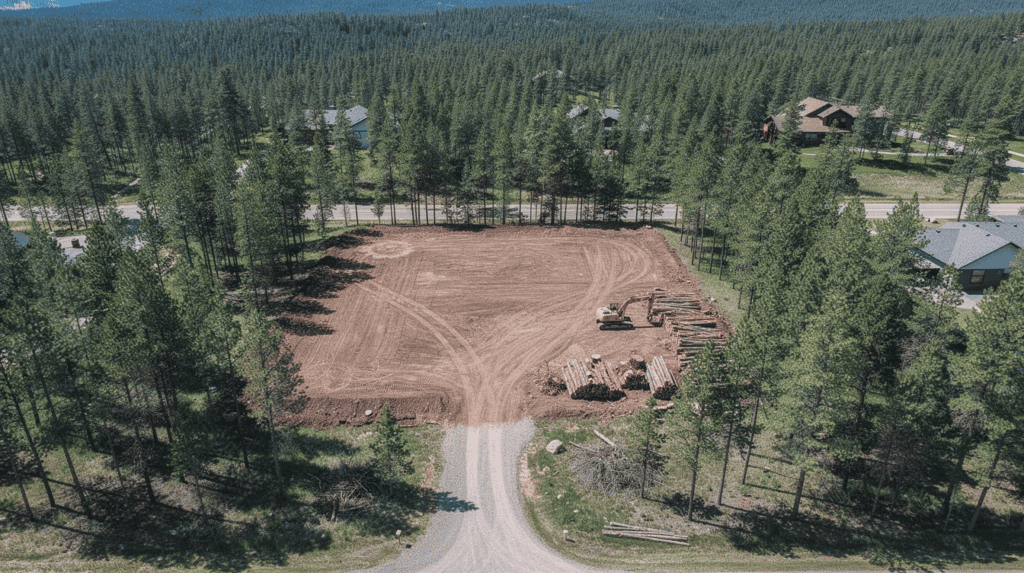
Raw land, steep slopes, and parcels requiring driveways, retaining walls, or tree clearing may increase the budget and perceived project risk. Private roads, wells, septic systems, power availability, and winter access are common issues in Kootenai County that may increase documentation needs. A combined land and construction loan (sometimes called a lot loan) may be available under some programs, while others require the land purchase separately.
Owning land outright may, in some cases, count toward the construction loan down payment, but the lender must document and approve that value. Construction loan appraisal relies on plans, specs, budget, and comparable sales to estimate as-completed value; limited comparable sales for rural acreage or custom lakefront homes can lead to more conservative valuations. These property factors can affect loan-to-value and documentation, but they do not automatically mean a higher rate in every case.
How to Compare and Improve Your Construction Loan Scenario with At Home Lending
Choosing a North Idaho construction loan should involve comparing full cost, structure, and service. Ask each lender or mortgage broker about: construction loan rate, APR, discount points, origination fees, draw and inspection fees, construction-phase payment structure, rate-lock rules, and permanent mortgage terms. Compare how different programs handle construction to permanent conversion, contingency reserves, down payment, and requirements for credit, debt-to-income ratio, and cash reserves.
To strengthen your file: review credit early and understand the factors that make up your score, limit new debt, gather income and tax documents, select an experienced builder, secure detailed plans with line-item budgets, and confirm land access and utilities before finalizing offers. Refinancing after completion may be an option in some situations, but it depends on future Idaho mortgage rate trends, property value, borrower qualification, closing costs, and whether the new loan is financially beneficial.
At Home Lending, as an independent home loan brokerage in Coeur d’Alene, works with multiple lenders. Local borrowers can review a variety of North Idaho construction loan options and other customized mortgage strategies instead of being limited to one bank’s in-house program. Discuss your construction project with At Home Lending or explore a home improvement loan into mortgage option for renovation scenarios.
Only a personalized review of your credit, income, land, builder, and plans can produce an accurate quote tailored to your planned home in North Idaho.
Frequently Asked Questions About Construction Loan Rates in Idaho
These answers address common questions At Home Lending hears from North Idaho borrowers.
What are construction loan rates?
The interest costs charged on money borrowed to finance land or new construction, varying by program, lender, and borrower profile, and ultimately affecting your overall cost of homeownership.
Are construction loan rates higher than mortgage rates?
They may be higher, similar, or occasionally lower depending on program and market. Do not assume they are always higher.
What affects construction loan rates in Idaho?
Credit, income, debt-to-income ratio, down payment, land equity, loan-to-value, builder approval, project budget, property type, appraisal, and market conditions.
How do one-time close construction loan rates work?
With a one-time close construction loan, the construction phase and permanent mortgage are planned through one closing. Rate treatment, payment structure, and permanent mortgage terms depend on the lender and program.
Are one-time close construction loans cheaper than two-time close?
Sometimes they reduce duplicate closing costs and requalification risk, but total cost must be compared case by case.
Can the rate be locked before construction starts?
Can the rate be locked before construction starts? Some programs may allow a rate lock or another rate-setting structure, but timing and terms vary by lender and program. Ask for written details.
What happens if rates change during construction?
What happens if rates change during construction? It depends on the program and closing documents. Some structures may protect the permanent rate, while others may allow changes or modifications. Understanding the rate rules before closing is critical.
Do construction loans have interest-only payments?
Do construction loans have interest-only payments? Some construction loans use interest-only payments during the construction phase, while others may use interest reserves or different payment structures.
Is interest charged on the full loan amount or only funds drawn?
Some programs charge interest on disbursed funds through the draw process, while others may calculate payments differently. Confirm the exact structure with your lender.
What fees come with construction loans?
Common fees include origination, discount points, appraisal, title, escrow, inspection fees, draw fees, and other closing costs.
Does the builder affect the loan rate?
Builder approval focuses on risk and eligibility; a stronger builder profile may help the overall project appear less risky to the lender.
Does land ownership affect construction loan pricing?
Owning land can influence equity and loan-to-value, which may indirectly affect pricing. Each case is reviewed individually.
Can land equity help with the down payment?
In some structures, documented land equity may count toward required borrower contribution, subject to appraisal and lender rules.
Does credit score affect construction loan rates?
Credit profile often influences both eligibility and pricing, but no single score guarantees approval or a specific rate.
Do construction loans require more reserves?
Construction financing may require reserves or contingency funds depending on the program, borrower profile, project, and lender. Ask your loan officer for specifics.
How does the appraisal affect the loan?
The appraisal may affect the maximum loan amount, loan-to-value, borrower contribution, and sometimes pricing. If the appraised as-completed value is lower than expected, you may need to adjust plans or bring more cash.
What is an as-completed appraisal?
An appraisal estimating property value after construction is finished, based on plans, specifications, and comparable sales.
Can I compare construction loan rates online?
Online research provides general education, but accurate construction loan quotes require sharing detailed information about credit, income, land, builder, and plans.
What should I ask before choosing a construction loan?
A short checklist: rate, APR, fees, rate-lock terms, draw schedule, inspection requirements, construction-phase payment structure, permanent mortgage terms, and what happens if the project changes.
How can At Home Lending help with construction financing?
At Home Lending helps North Idaho borrowers compare available home construction loan options, review total cost, and evaluate programs that may fit their project. Contact At Home Lending for a personalized conversation.