
USDA home loan basics for Idaho buyers
If you’re exploring home loans in Idaho and want to buy a house with little or no money down, a USDA home loan may deserve a closer look. This guide is for Idaho homebuyers interested in USDA loans, especially those in North Idaho and the Coeur d’Alene area. This guide breaks down USDA loan requirements for Idaho buyers, with specific context for North Idaho and the Coeur d’Alene area, so you can understand what it takes to qualify before you start house hunting. Understanding USDA requirements can help you access affordable home financing with little or no down payment.
USDA loans are intended for low- to moderate-income buyers purchasing a primary residence in an eligible rural or semi-rural area. They may offer up to 100% financing for eligible borrowers and eligible properties, and they use USDA guarantee fees instead of conventional private mortgage insurance. But they come with rules that other mortgage programs don’t have, and meeting those rules is only part of the picture.
Here’s what you need to know at a high level:
- Most Idaho borrowers use USDA guaranteed loans issued through private lenders, not USDA direct loans funded by the government.
- At Home Lending is an independent mortgage broker in Coeur d’Alene that can help you compare USDA, FHA, VA, and conventional loans side by side.
- USDA loan requirements cover two separate gates: USDA eligibility (property location, household income, occupancy) and lender approval (credit score, debt to income ratio, employment history, assets).
- Even when USDA financing allows no required down payment for an eligible borrower and property, buyers should still plan for closing costs, prepaid items, inspections, and other out-of-pocket expenses.
What is a USDA loan and how does it work in Idaho?
A USDA loan is a mortgage loan backed by USDA Rural Development under the Single Family Housing program. It’s designed to help eligible buyers in qualifying areas purchase homes they’ll live in full-time. These are not farm loans, and the word “rural” may be more flexible than you expect. In Idaho, many small towns and outer suburbs that feel suburban rather than remote can fall within a USDA eligible area.
Here’s how the program works for Idaho borrowers:
- Government guarantee, not government funding. With a USDA guaranteed loan, a private lender originates the mortgage. USDA backs a portion of the loan against default, which can help approved lenders offer up to 100% financing for eligible borrowers and eligible properties.
- Fixed-rate, 30-year terms. USDA mortgages are structured as fixed-rate loans, typically over 30 years, keeping monthly mortgage payments predictable.
- Primary residence only. The home must be your primary residence to qualify. You cannot use USDA financing for an investment property, vacation home, or short-term rental.
- Process overview. You start with prequalification through a broker like At Home Lending, verify property and income eligibility, complete full underwriting with the lender, and receive USDA’s conditional guarantee before closing.
USDA loans can sometimes be used for certain refinances, but this guide focuses on purchase loans for Idaho homebuyers.
Types of USDA home loans: Guaranteed vs. Direct
USDA loans include guaranteed, direct, and home improvement options. Each serves a different borrower profile. Here’s how they break down for Idaho buyers.
USDA Guaranteed Loans
Guaranteed loans are the most common USDA loan type. They’re issued by private lenders, banks, credit unions, and mortgage companies, and are available through brokers like At Home Lending. These are designed for low- to moderate-income borrowers who meet income limits and credit guidelines set by both USDA and the lender.
If you’re shopping for homes around Post Falls, Rathdrum, Hayden, Sandpoint, or other North Idaho communities where portions of the area may be USDA-eligible, the guaranteed loan program is likely the path you’d take.
USDA Direct Loans
Direct loans are funded and serviced directly by USDA Rural Development. They’re reserved for very low-income borrowers and low income borrowers who cannot secure financing elsewhere. USDA Direct Loans may include payment assistance or subsidy features for eligible borrowers. Applying typically involves working with USDA Rural Development rather than a mortgage broker.
Home Improvement Loans
Home improvement loans help low-income homeowners with repairs and upgrades to existing properties. These are separate from purchase financing and won’t be the main focus of this guide, but Idaho borrowers considering renovations may want to explore home improvement and renovation mortgage options that can roll project costs into their financing.
Most readers exploring USDA mortgages for a home purchase in Idaho will be looking at the guaranteed loan program.
USDA eligibility vs. lender approval: what’s the difference?
This distinction trips up a lot of buyers. USDA eligibility and lender approval are two separate checkpoints, and you need to clear both.
USDA eligibility means:
- The property is in an eligible rural area based on USDA’s mapping criteria.
- Your total household income falls within USDA income limits for your county and household size.
- You plan to occupy the home as your primary residence.
Lender approval means:
- Your credit history, credit score, debt to income ratio, employment stability, and overall financial picture meet the lender’s underwriting standards.
A concrete example: a family of four near Coeur d’Alene might meet income requirements and find a home in an eligible location, but if their credit profile or total debt load doesn’t meet lender guidelines, the loan won’t be approved. On the other hand, a borrower with strong credit and dependable income who exceeds the USDA income cap would be ineligible for the USDA program entirely, even though a lender might approve them for FHA loans or conventional financing in Idaho.
At Home Lending can help Idaho borrowers sort through which loan programs fit their financial situation if one piece of USDA eligibility doesn’t work out, drawing on independent mortgage brokerage options in Coeur d’Alene for a wide range of customized loan strategies.
Property location rules: what counts as “eligible rural” in Idaho?
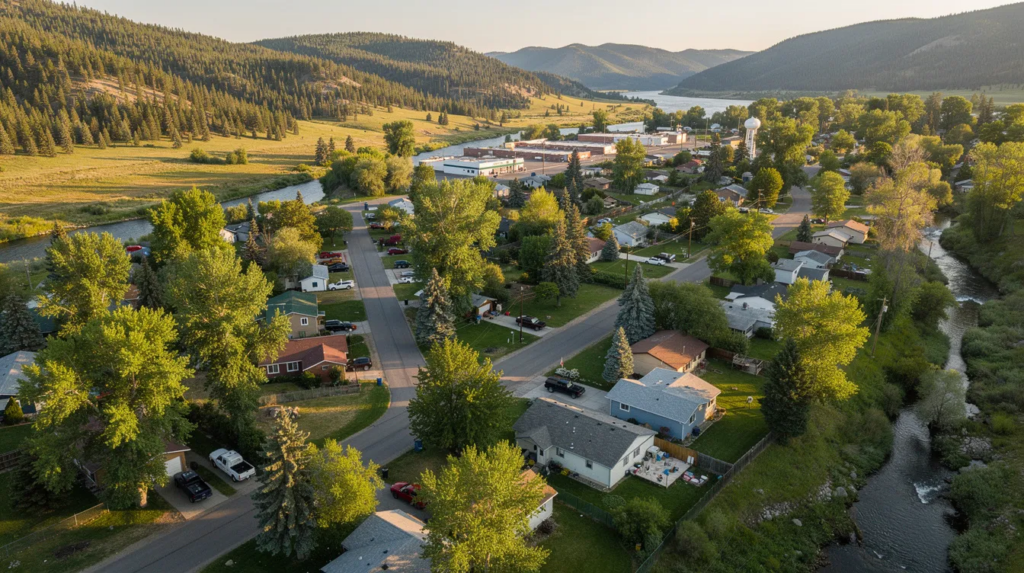
USDA defines an eligible rural area based on population thresholds, development density, and other classification criteria. In Idaho, this doesn’t always mean “middle of nowhere.” Many small towns and outer suburban communities qualify, even if they feel like normal neighborhoods.
Idaho-specific context:
- Parts of Kootenai County, Bonner County, Shoshone County, Benewah County, and surrounding North Idaho areas may have USDA-eligible zones, while more built-up areas near downtown Coeur d’Alene may not.
- The property must be located in a USDA-eligible area, and USDA loans are limited to properties in eligible rural areas. A single street can straddle the boundary between eligible and ineligible zones.
- Fast-growing communities around Idaho metros risk losing eligibility as maps are updated. No city or ZIP code should be assumed fully in or out without checking.
How to verify property eligibility:
- Use the official USDA property eligibility website to enter a specific street address. USDA home loans can be applied for online using the official eligibility mapping tool to confirm location status.
- Send addresses to your real estate agent or to At Home Lending to help confirm whether a property appears within an eligible area.
- Remember that the property must be a typical residential home for the area, used as a primary residence, and not primarily designed for income-generating or commercial use.
USDA income limits and household rules
USDA guaranteed loans generally cap adjusted household income at approximately 115% of the area median income for each Idaho county. Household income must be within 115% of area median income to qualify, though exact dollar amounts change periodically and must be checked against current USDA tables.
Here’s what makes USDA income requirements different from other mortgage programs:
- Household income, not just borrower income. Lenders evaluate the combined income of all adults living in the household, including working adult children or partners not on the mortgage. Your total household income must fall within the program’s limits, even if only one person is applying for the loan.
- Adjusted income matters. USDA allows certain deductions, such as eligible childcare costs or dependent allowances, when calculating adjusted income. This can help families whose gross monthly income slightly exceeds the limit still meet income limits after adjustments.
- Idaho example. A household of four near Coeur d’Alene whose combined income is near the local limit might qualify after deductions for dependents. Meanwhile, a higher-earning couple with no dependents and the same gross income in the same county could exceed the cap.
Don’t self-disqualify based on rough estimates. Income rules depend on household size, county, and allowable deductions. Contact At Home Lending to review current USDA income limits for your specific Idaho county and situation.
Borrower requirements: credit score, debt-to-income, and employment
Beyond income and property eligibility, lenders review your full financial picture before approving a USDA mortgage loan. Here’s what many lenders look at.
Credit score
USDA does not set one universal national minimum credit score for every borrower scenario. However, many lenders use credit-score benchmarks for automated underwriting and may apply their own overlays. Some lenders may consider lower scores with strong compensating factors, while others may set higher minimums. Understanding what factors make up your credit score can help you prepare.
Debt to income ratio
Debt-to-income ratio is calculated by dividing monthly debt payments, such as credit cards, auto loans, student loans, child support, and other obligations, by gross monthly income. USDA and lender guidelines may use front-end and back-end ratio benchmarks, but automated underwriting, compensating factors, credit profile, reserves, and lender overlays can affect the final review.
Employment and steady income
Most lenders want to see about two years of consistent employment or stable income history. For Idaho’s self-employed or seasonal workers in construction, tourism, or logging, tax returns and additional documentation are typically needed to demonstrate dependable income over time.
Other criteria
- Applicants must be U.S. citizens, non-citizen nationals, or qualified aliens.
- Recent major credit events like bankruptcy or foreclosure within the past few years may require waiting periods before a USDA loan is possible.
USDA property standards and appraisal requirements
Beyond location, properties financed with a USDA home loan must meet minimum property requirements. Properties must meet basic safety, structural, and sanitary standards, similar in spirit to FHA guidelines.
Typical requirements include:
- Functional heating system appropriate for Idaho winters
- Safe electrical system and plumbing in working order
- Roof in good condition with no active leaks
- Adequate road access, potable water, and acceptable waste disposal (public sewer or approved septic)
The USDA appraisal
USDA loans require an appraisal that supports both value and property acceptability under applicable program and lender requirements. The lender orders the appraisal from a qualified appraiser who both estimates value and checks basic property condition against USDA guidelines. Appraisal costs are part of your closing costs and vary by area and provider.
What’s allowed and what’s not:
- Single family homes, some townhomes, and certain approved manufactured homes are eligible property types.
- USDA loans cannot be used for vacation homes or income-producing properties. The home must be your primary residence.
- Properties primarily designed for agricultural or commercial use are not eligible.
Work with a real estate agent familiar with USDA property rules in North Idaho to avoid targeting homes with obvious condition issues that could stall approval.
Down payment, 0% down, and closing costs explained
The zero down payment requirement is one of the biggest draws of USDA financing. USDA loans may allow up to 100% financing for eligible buyers and eligible properties, subject to USDA rules, appraised value, purchase price, lender requirements, and underwriting approval. You may still choose to make a down payment to lower your loan amount and monthly payments.
Closing costs still apply
Even with no down payment requirement, buyers should budget for:
- Lender fees, appraisal, title insurance, recording fees, and escrow
- Prepaid property taxes and homeowners insurance
- In some cases, if the appraised value exceeds the purchase price, USDA guidelines may allow certain costs to be financed into the loan, but this depends on value, program rules, and lender policies.
Guarantee fee instead of PMI
USDA loans do not require private mortgage insurance like many conventional loans. Instead, they use a guarantee fee structure. USDA guaranteed loans use an upfront guarantee fee and an annual fee structure. USDA’s current published fee structure references a 1.00% upfront guarantee fee and a 0.35% annual fee, but borrowers should confirm current USDA and lender figures when comparing options. At Home Lending can provide current fee figures when quoting your scenario.
Budget realistically
Plan for earnest money, home inspections, and other out-of-pocket items even with 0% down. Use At Home Lending’s loan calculator to estimate how these costs affect your monthly mortgage payments.
How to apply for a USDA home loan in Idaho
You must gather necessary documentation before applying for a USDA loan. Here’s a step-by-step overview:
- Talk to a broker. Speak with At Home Lending to review USDA, FHA, VA, and other loan programs based on your finances and Idaho property plans.
- Get pre-qualified. Establish a realistic price range before home shopping so you and your real estate agent can focus your search.
- Target eligible properties. Work with your agent to find homes in eligible rural or semi-rural areas. Verify each address on the USDA property eligibility map or with your broker.
- Submit your application. Provide income and asset documentation: pay stubs, W-2s, tax returns for self-employed borrowers, bank statements, and identification.
- Appraisal and inspection. The USDA approved lender orders the appraisal. Arrange an independent home inspection to catch issues early.
- Underwriting and USDA guarantee. After lender underwriting and USDA’s guarantee sign-off, you attend closing, review final figures, and sign documents.
Timeline note: USDA loans can take longer to process than some conventional loans because of the additional USDA review step. Build realistic timelines into your purchase contracts, especially in competitive North Idaho markets. The final timeline depends on borrower documentation, appraisal, title, lender underwriting, USDA review, and closing conditions.
USDA loans vs. FHA and conventional loans in Idaho
Understanding how USDA loans compare to other mortgage programs helps you make a more informed decision. Here’s a practical breakdown for Idaho buyers. For a deeper look at all available options, explore the different types of mortgage loans.
USDA loans:
- May allow up to 100% financing for eligible buyers and eligible properties
- Use guarantee fees instead of mortgage insurance
- USDA loans may price differently from FHA loans depending on borrower profile, lender pricing, market conditions, fees, and program structure
- Restricted to eligible rural areas and buyers who meet income limits
FHA loans:
- Available statewide with no geographic restrictions
- May allow a low down payment for eligible borrowers with qualifying credit and lender approval
- May suit buyers whose income exceeds USDA limits or who want to purchase in an ineligible area like central Coeur d’Alene; if you’re weighing this option, review FHA loan requirements in Idaho to see how they compare.
Conventional loans:
- Some conventional loan options may allow low down payments for qualified buyers
- May require private mortgage insurance when the down payment is below 20%, depending on the loan structure and lender requirements
- A conventional mortgage may be worth comparing for higher-credit borrowers, larger down payments, different property types, or buyers whose income or location does not fit USDA rules
VA loans are another option for eligible veterans and service members, and they may offer no-down-payment financing for qualified borrowers.
As an independent mortgage broker with mortgage industry experience in the Coeur d’Alene market, At Home Lending helps eligible buyers see how USDA loans compare to FHA, VA, and conventional financing through side-by-side payment estimates and cash-to-close figures, similar to their process for providing free, no-obligation mortgage quote comparisons on purchase and refinance scenarios.

Is a USDA home loan a good fit for your Idaho home purchase?
USDA financing can be a strong option in the right circumstances. Here’s a quick summary of when it works and when it might not.
USDA may be a good fit if:
- You want to review a low- or no-down-payment option and may qualify under USDA borrower and property rules
- Your household income fits within local USDA income limits and you’re shopping in an eligible rural area
- You’re a first-time or repeat buyer prioritizing monthly-payment affordability over buying in a dense urban core
Another loan type might work better if:
- Your preferred neighborhood isn’t in a USDA-eligible area
- Your moderate income or higher income exceeds USDA caps but you still want low down payment choices
- You’re planning to buy a second home or investment property, which the USDA program does not allow
The right loan depends on your financial situation, the property you want, and the area where you plan to live. Understanding USDA loan requirements is just the first step.
If you’re in Coeur d’Alene or anywhere across North Idaho, request a personalized review from At Home Lending. Bring sample property addresses or ZIP codes so we can walk through USDA eligibility checks, estimated payments, and cash-to-close scenarios alongside FHA, VA, and conventional options from multiple participating lenders.